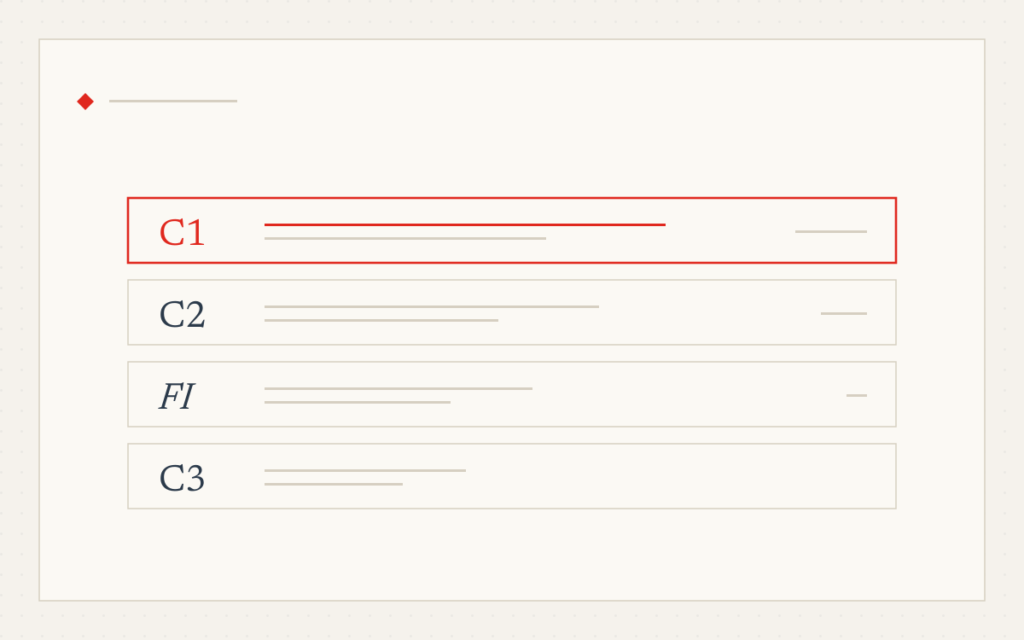
Every observation an inspector records on an EICR carries a classification code. There are four of them, and between them they decide two things: whether the report is satisfactory, and whether you have work to do and a deadline to do it in.
C1 — danger present
A risk of injury exists right now. Exposed live parts, for example, or a fault that could cause a shock or a fire today. An inspector finding a C1 will normally make the installation safe on the spot and tell you immediately. A C1 makes the report unsatisfactory and demands immediate action.
C2 — potentially dangerous
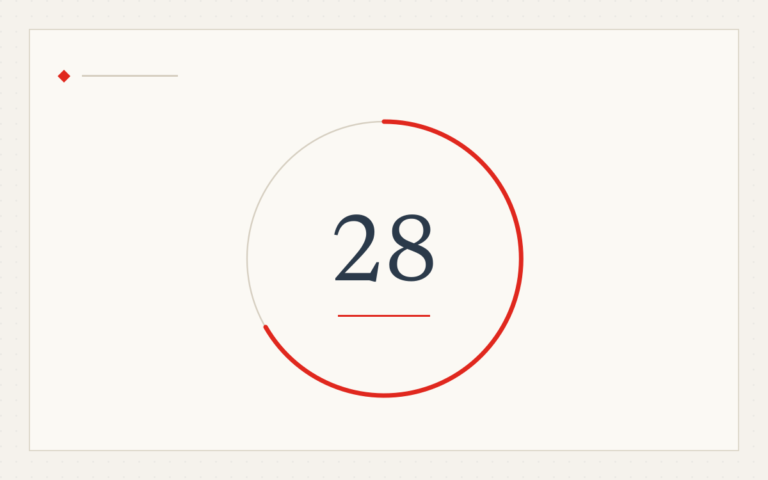
Not an immediate danger, but something that could readily become one — a missing earth connection, say, or protective devices that would not disconnect quickly enough in a fault. A C2 makes the report unsatisfactory, and the remedial work must be put right within 28 days of the report (or sooner, if the report specifies a shorter period).
FI — further investigation required
The inspector has found something that warrants investigation without delay, but cannot establish from the inspection alone whether it is dangerous. An FI also renders a report unsatisfactory. It is not a soft finding: it means a question is open, and open questions about an electrical installation get closed quickly.
C3 — improvement recommended
The only code that does not fail a report. A C3 is a recommendation rather than a requirement: the installation is safe to use, but bringing that particular item nearer the current standard would improve it. You are not obliged to act on a C3, and a report carrying nothing but C3s is satisfactory.
Reading the summary line
A report is deemed satisfactory only where it records no C1, no C2 and no FI. If any of those three appear, the remedial work must be completed within 28 days — and written confirmation that it has been done must go to your tenants and, on request, to the local authority.
If a code on your own report is not clear, ask the contractor who issued it to explain that specific observation. A competent inspector will expect the question.